



A Journey Through Distinctive Trims: Comparing The Ford Explorer ST-Line, Platinum™, & ST
The Ford Explorer stands as a testament to versatility and capability, offering a range of trims designed to cater to diverse preferences and lifestyles. Among its distinguished lineup, the Ford Explorer ST-Line, Platinum™, and ST emerge as compelling choices, each sculpted with unique characteristics that promise an exceptional driving experience. Whether your journey calls for sophisticated style, refined luxury, or exhilarating performance, the Ford Explorer lineup provides a robust foundation for adventure, family excursions, and daily commutes, embodying a spirit of exploration and discovery. These models are crafted for those who demand more from their vehicle, seamlessly blending practicality with an undeniable presence on the road. Continue to read more about the Ford Explorer trim level comparison in this blog from Crossroads Ford of Indian Trail. Once you have all of the information you need, visit our dealership in Indian Trail, NC, to find your model today!
Power & Presence
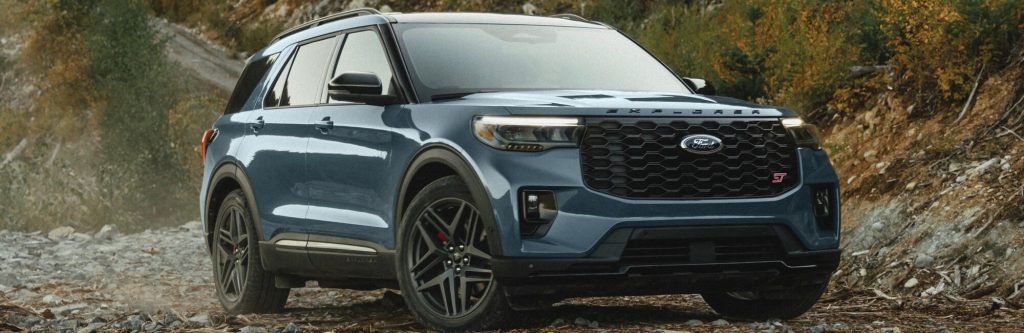
As the heart of the Ford Explorer ST-Line vs. Platinum vs. ST, the engine specifications reveal distinct personalities. The Ford Explorer ST-Line and Ford Explorer Platinum are powered by a potent 2.3L EcoBoost® I-4 engine, delivering a robust 300 horsepower and 310 lb.-ft. of torque. This powertrain ensures a responsive and efficient drive, perfectly suited for both urban environments and open highways. In contrast, the Ford Explorer ST elevates performance with a formidable 3.0L EcoBoost® V6 engine, unleashing an impressive 400 horsepower and 415 lb.-ft. of torque, designed for those who crave an adrenaline-fueled journey.
Beyond raw power, the exterior styling of each trim communicates its individual character. The Ford Explorer ST-Line distinguishes itself with Blackout Treatment on its headlamps and taillamps, complemented by 20-in. Ebony-Painted Machined Aluminum wheels, projecting a sleek and sporty aesthetic. The Ford Explorer Platinum exudes elegance with Autolamp headlamps and 20-in. Luster Nickel-Painted Aluminum wheels, hinting at its luxurious disposition. Meanwhile, the Ford Explorer ST asserts its performance pedigree with striking 21-in. Magnetite-Painted Aluminum wheels and distinctive Quad Chrome Exhaust tips, signaling its dynamic capabilities.
Despite their individual stylistic and performance nuances, the Ford Explorer ST-Line vs. Platinum vs. ST share a remarkable maximum towing capacity of 5,000 lbs., underscoring the Ford Explorer’s inherent utility and readiness for any adventure that requires hauling—no matter what style.
Sanctuary of Innovation
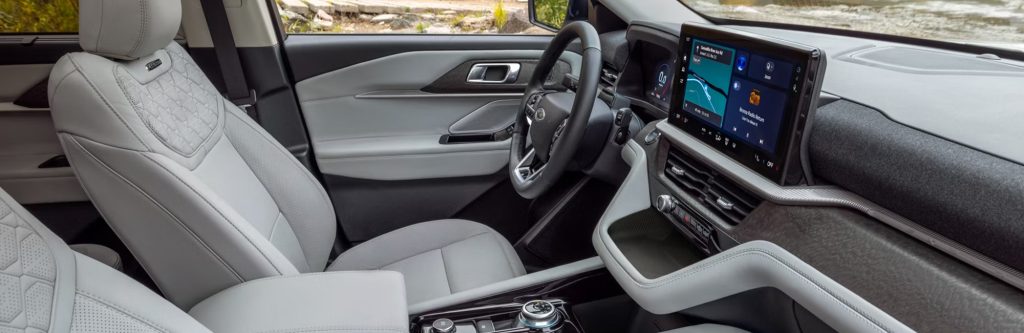
Stepping inside, the cabins of the Ford Explorer ST-Line vs. Platinum vs. ST offer a sanctuary of comfort and advanced technology, each with its own distinctive flair. Seating materials are a key differentiator. The Ford Explorer ST-Line features ActiveX™ and cloth seating with red stitching, providing a sporty and inviting atmosphere. With the available Lux Leather Package, the Ford Explorer Platinum elevates the experience with premium leather seating surfaces, quilting on seats, matching quilting and stitching on the door panels, Platinum front-row badging, and more, offering a touch of sophisticated luxury. For the performance-oriented, the Ford Explorer ST boasts ActiveX seating material with Miko® inserts, accent stitching, and the iconic ST logo, creating an environment that is both supportive and stylish. While specific seating capacity is adaptable, the availability of features like Second Row Captain’s Chairs for the Ford Explorer ST-Line (requiring a Premium Package with RWD) and standard PowerFold® third-row seats for the Ford Explorer ST and Platinum highlights their versatile interior configurations.
Technology and connectivity are paramount across the lineup. The Ford Explorer ST-Line vs. Platinum vs. ST each come equipped with Ford Co-Pilot360® Assist 2.0, a suite of advanced driver-assist technologies, ensuring peace of mind on every journey. The Ford Explorer ST-Line also includes a 360-Degree Camera and a B&O® Sound System with 10 speakers, while the Ford Explorer Platinum upgrades an available more immersive B&O® Sound System with 14 speakers. The Ford Explorer Platinum and ST enhance the driving experience with ambient lighting and an auto-dimming rearview mirror. The Ford Explorer ST includes even more features like performance brakes, a sport-tuned suspension, and rain-sensing wipers, blending convenience with its performance focus. Furthermore, shared available technologies such as a three-year SiriusXM® plan and the Ford Connectivity Package ensure that all occupants remain connected and entertained. For those seeking cutting-edge innovation, the Ford Explorer offers available BlueCruise Hands-Free Highway Driving, representing a significant leap in driving convenience.
Defining Your Drive
In conclusion, the Ford Explorer ST-Line vs. Platinum vs. ST each present a compelling proposition within this midsize SUV family, meticulously crafted to meet distinct desires. The Ford Explorer ST-Line appeals to those who appreciate a sporty aesthetic and advanced technology, while the Ford Explorer Platinum caters to a taste for refined luxury and premium comfort. The Ford Explorer ST, with its powerful engine and performance-tuned features, is designed for enthusiasts who seek an exhilarating and dynamic driving experience.
While the Ford Explorer ST-Line vs. Platinum vs. ST share the foundational strengths of the Ford Explorer, their unique combinations of engine prowess, exterior styling, interior appointments, and technological advancements ensure that there is a perfect model for every discerning driver. To truly appreciate the craftsmanship and innovation embedded in each of these models, we invite you to Crossroads Ford of Indian Trail for a personal introduction and a test drive. Discover firsthand which Ford Explorer best complements your lifestyle and aspirations today!
How Much Cargo Space Does a Ford Explorer Have?

Ford Explorer Cargo Space: Room To Handle Real Life
When it comes to choosing a midsize SUV that can adapt to everyday demands and weekend plans alike, the Ford Explorer continues to stand out as a versatile and capable option. Built with flexibility in mind, the Ford Explorer cargo space supports a wide range of lifestyles, from families juggling busy schedules to drivers who need room for hobbies, travel, or home projects. Its three-row layout allows passengers and gear to coexist comfortably, making it easy to transition from people hauler to cargo-ready vehicle whenever needed.
What makes this family-friendly SUV especially appealing is how intuitively its interior is designed. Rather than focusing only on maximum figures, the Ford Explorer cargo space is shaped to be usable, accessible, and practical in real-world scenarios. Whether you’re loading daily essentials or packing for extended trips, it delivers confidence that everything will fit without compromise. Visit Crossroads Ford of Indian Trail to see the Ford Explorer cargo space for yourself!
Cargo Space That Adjusts to Your Day
One of the Ford Explorer’s greatest strengths is how its cargo area scales based on your needs. With all seats up, there’s 16.3 cu.ft. of cargo space behind the third row, ideal for groceries, backpacks, or sports equipment. This setup works well for daily errands when all passenger seats are occupied, but storage is still required.
When additional room is needed, folding down the third-row seats expands the Ford Explorer cargo space to 46 cu.ft. behind the second row. This configuration is well-suited for longer trips, bulk shopping, or transporting larger items such as strollers, folding tables, or camping supplies. The flat load floor makes loading easier and helps prevent items from shifting during travel.
For maximum hauling capability, folding both the second-row and third-row seats opens up 85.8 cu.ft. of maximum cargo capacity behind the front seats. In this layout, the Ford Explorer’s cargo space with seats down becomes expansive enough to handle furniture, bicycles, or supplies for larger projects, reinforcing its ability to adapt to changing needs.
Practical Space Without Wasted Room
While numbers matter, the shape and usability of the cargo area are just as important. The Ford Explorer cargo space is designed to minimize wasted room, offering a wide opening and low load height that make lifting and organizing easier. This thoughtful design ensures that storage feels generous not only on paper but in everyday use. The balance of width, height, and depth allows for efficient packing, whether you’re stacking luggage or fitting longer items. As a result, the Ford Explorer cargo space feels purposeful and accommodating, helping drivers make the most of every inch. Quick-fold seating further enhances flexibility, allowing the interior to transform in moments. Whether plans change unexpectedly or a larger load needs to be transported, the Ford Explorer is ready without requiring complicated adjustments.

Designed for Travel and Long Trips
For drivers who enjoy road trips or frequent travel, cargo capacity plays a major role in comfort. The Ford Explorer excels here by providing room for suitcases and travel essentials without crowding passengers. Even with the third row in use, the Ford Explorer cargo space supports organized packing that keeps items accessible and the cabin clutter-free. When traveling with fewer passengers, folding down seats creates additional room for longer journeys. The Ford Explorer cargo space allows travelers to separate personal items, recreational gear, and luggage, making extended drives more comfortable and manageable.
This adaptability makes the Ford Explorer ideal for spontaneous trips as well. Whether it’s a weekend getaway or a longer vacation, the vehicle is always ready to accommodate changing plans.
Everyday Convenience for Busy Lifestyles
Cargo space isn’t only about big adventures, it’s also about how a vehicle fits into everyday routines. With all seats upright, the Ford Explorer cargo space easily handles groceries, school supplies, and everyday essentials without feeling cramped. Parents benefit from the ability to store sports equipment and backpacks without sacrificing passenger comfort, while active drivers can load gym bags or outdoor gear with ease. In these moments, the Ford Explorer’s trunk space proves its value by making daily life more convenient. This flexibility reduces stress, too. Knowing there’s room for unexpected purchases or last-minute needs adds peace of mind that smaller vehicles often can’t provide.
Utility That Goes Beyond Numbers
Beyond its maximum 85.8 cu.ft. of cargo capacity, the Ford Explorer shines in overall utility. Flat-folding seats create a long, open cargo area capable of transporting items like lumber, ladders, or recreational equipment. In this configuration, the Ford Explorer cargo space supports tasks that might otherwise require a truck or trailer. This versatility is especially useful for drivers who balance work, family, and leisure. Whether helping a friend move or picking up larger purchases, the Ford Explorer cargo capacity adapts without feeling bulky or unwieldy. The benefit extends beyond day-to-day use. As needs evolve over time, this SUV continues to deliver, making it a vehicle that grows with its owner.
A Midsize SUV That Fits Your Life
Ultimately, the Ford Explorer stands out because it reflects how drivers actually use their vehicles. Its cargo space isn’t just generous, it’s practical, flexible, and easy to live with. From everyday errands to major life events, the Ford Explorer cargo space is versatile and efficient for all of your needs. Whether hauling supplies, packing for a trip, or simply enjoying the confidence that comes with extra room, the Ford Explorer’s luggage space continues to make this SUV a compelling choice for drivers who value versatility and real-world usability. Secure yours today when you visit Crossroads Ford of Indian Trail!
Ready Set Ford

A New Era for the Blue Oval
Ford Motor Company is entering a bold new chapter, and Crossroads Ford of Indian Trail is excited to share what it means for our customers. The new global advertising platform, Ready Set Ford, is more than just a fresh look—it’s a strategic shift designed to connect with drivers in new and inspiring ways.
What is “Ready Set Ford”?
“Ready Set Ford” is Ford’s new advertising platform, built on the foundation of capability, passion, community, and trust. It’s designed to celebrate not only what Ford vehicles can do, but what they empower you to do.
This rebrand focuses on three key shifts:
- Highlighting Our Strengths – Ford’s legacy of strength, innovation, and trust remains front and center.
- Empowering Customers – The campaign celebrates the lifestyles Ford enables: building businesses, chasing thrills, and seeking adventure.
- Leading With What You Love – Expect more focus on the Ford vehicles and services that customers are most passionate about, from trucks to SUVs to performance icons.
Why It Matters
At its heart, Ready Set Ford is about you—the driver. Whether you’re pushing limits with a Ford Bronco, building your business with a Ford F-150, or heading out for family adventures in a Ford Explorer, this rebrand is about helping you live your best days behind the wheel.

Visit Crossroads Ford of Indian Trail
As your local Ford partner, Crossroads Ford of Indian Trail is proud to bring this new era to life. Stop by our showroom to see the latest Ford lineup and experience firsthand how Ready Set Ford is shaping the future of driving.
Ready. Set. Ford.

Ford F-150 vs. Chevy Silverado 1500: Head-To-Head Comparison
When it comes to full-size pickup trucks, the Ford F-150 vs. Chevy Silverado 1500 are two names at the top of everyone’s list. Both are icons in the segment, delivering performance, comfort, and style in ways that cater to hard workers and weekend adventurers alike. These models are leading full-size pickup trucks in the market, offering exceptional towing and payload capabilities for a variety of needs. But when it comes down to value, capability, and innovation, the Ford F-150 stands a step ahead. Come see for yourself at Crossroads Ford of Indian Trail, where we invite you to test-drive the Ford F-150 and experience the difference between the Ford F-150 vs. Chevy Silverado 1500 firsthand. This is a great opportunity to get behind the wheel of a new truck and let our team help you navigate the current truck market to find the perfect fit for you.
Rugged Design Meets Raw Power
Comparing the Ford F-150 vs. Chevy Silverado 1500, you’ll discover some surprising specs that make the Ford F-150 a standout choice. The Ford F-150 makes a bold entrance with sleek standard LED lighting, a black coast-to-coast grille, bed storage boxes, and functional design like Pro Power Onboard and dual front tow hooks. The Ford F-150 is available in a variety of body styles, including Regular Cab, SuperCrew®, and Super Cab configurations, as well as short and extended bed options, allowing you to choose the best fit for your needs. From eye-catching colors like Antimatter Blue Metallic to appearance packages like the STX® Black or Lariat® Black, the Ford F-150 allows full personalization. For added convenience, Ford offers a Twin-Panel Moonroof and the versatile Pro Access Tailgate swing-out door.
Under the hood, the Ford F-150 boasts a wide range of engine options to suit different needs. It starts strong with a 2.7L EcoBoost® V6 engine putting out 325 horsepower, and climbs to an impressive 3.5L PowerBoost® Full-Hybrid V6 delivering 430 horsepower and 570 lb.-ft. of torque. For the ultimate Ford F-150 power, the Ford F-150 Raptor® R™ contains a Supercharged 5.2L V8. The Chevy Silverado 1500 also has a variety of engine options, starting with the 2.7L TurboMax™, which puts out 310 horsepower, lower than the Ford’s standard. Its three other engine options aren’t able to surpass the Ford F-150’s torque maximum of 640 lb.-ft., only reaching up to 495 lb.-ft. If payload capacity is a priority, opt for the Ford F-150’s 3.5L EcoBoost® V6 offering a max payload of 2,440 lbs., a number the Chevy falls short of at up to 2,260 lbs. When you need muscle for towing, the Ford F-150 vs. Chevy Silverado 1500 towing capacity makes a clear distinction. The Ford reaches up to 13,500 lbs. of maximum towing capacity when properly equipped, beating the Chevy’s 13,300-lb. limit. Looking further, the Ford F-150 XLT vs. Chevy Silverado 1500 stands out with Ford’s Pro Trailer Backup Assist™ feature, along with several other towing tech additions. Towing adventures become simplified as a result, a feat that the Chevy Silverado 1500 couldn’t match.
Tech-Savvy Cabins Built for the Road Ahead
The Ford F-150 vs. Chevy Silverado 1500 interiors focus on intelligent tech and elevated comfort. The Ford’s standard 12-in. capacitive touchscreen with SYNC® 4 offers seamless Apple CarPlay® and Android Auto™. Productivity is always within reach with features like the available Interior Work Surface, Head-Up Display, and Ford BlueCruise for hands-free highway driving. The Ford F-150 stands out for its superior interior quality, especially in higher trims, offering premium materials and exceptional craftsmanship. The Chevy Silverado 1500, on the other hand, offers a 7-in. standard infotainment display with wireless smartphone connectivity, and even Google Built-In, but its standard tech starts lower and lacks Ford’s integrated work-focused features. The Ford F-150 vs. Chevy Silverado 1500 reliability don’t compromise when it comes to safety. Each model has its own suite of responsive safety features to ensure a smooth ride every time. With Ford’s Co-Pilot360® suite, you’ll get Pre-Collision Assist® with Automatic Emergency Braking, Lane Departure Warning, Adaptive Cruise Control, and more. The Chevy Safety Assist suite brings standard basics as well, but the Ford F-150 vs. Chevy Silverado safety comparison shows Ford’s robust and expandable suite adds more confidence for every mile.
The Truck For You
The Ford F-150 vs. Chevy Silverado 1500 brings impressive performance, style, and functionality to the table, but Ford edges out with greater payload, advanced hybrid power, superior tech integration, and better versatility for everyday use. Add in Ford’s trademark customization and intelligent driver assistance, and it’s clear the Ford F-150 stands in a class of its own. If you’re ready to get behind the wheel of one, visit Crossroads Ford of Indian Trail today!
Electric Truck Wars: Ford F-150 Lightning vs. Tesla Cybertruck – Which is Right for You?

Which Electric Truck Is Right for You?
In the battle of electric pickup trucks, two names dominate the conversation: the Ford F-150 Lightning vs. the Tesla Cybertruck. These trucks are part of a new generation of electric vehicles, playing a pivotal role in the evolving automotive landscape. Both represent a bold step toward the future of electrified work and play, but which truck is the better fit for your lifestyle? At Crossroads Ford of Indian Trail, we’re taking a closer look at the numbers, features, and real-world capability behind these futuristic pickups to help you decide.
Design: Classic Toughness or Sci-Fi Statement?
There’s no denying the visual contrast between these two EV trucks. The Ford F-150 Lightning retains the familiar, rugged silhouette of America’s best-selling truck—an intentional move that blends innovation with a proven legacy. It looks like a truck. It works like a truck. And it fits your lifestyle without the learning curve.
The Tesla Cybertruck, on the other hand, is something else entirely. With its stainless steel exoskeleton and angular, armored-vehicle vibe, it’s built to make a statement. While striking, the design is polarizing and may not appeal to traditional truck buyers who need versatility, not just flash. The Tesla Cybertruck’s design will likely divide truck buyers—some will appreciate its bold, futuristic look, while others may prefer the more conventional styling of competitors.
Capability: Which Truck Works Harder?
When comparing Ford F-150 Lightning vs. Tesla Cybertruck towing capacity, both offer serious muscle—but with a few key differences. The Ford F-150 Lightning can pull up to 10,000 pounds when properly equipped and features a maximum payload capacity of 2,235 pounds, making it a highly capable work truck for professional and heavy-duty tasks. Its bed is designed for utility, with integrated tie-downs to help secure and manage your load, ensuring cargo safety and ease of access. The Ford F-150 Lightning’s traditional truck frame and decades of Ford engineering give it rock-solid credibility when it’s time to haul, tow, or handle large loads. Additionally, the Ford F-150 Lightning offers strong off-roading capabilities, performing well on challenging terrain.
The Tesla Cybertruck boasts impressive projected numbers, claiming up to 11,000 pounds of towing capacity and up to 2,500 pounds of payload. The dual motor Tesla Cybertruck configuration, with its advanced motors, directly impacts both towing and range performance. Wheel size and type also play a significant role in how both the Tesla Cybertruck and Ford F-150 Lightning perform when towing or carrying heavy loads.
Range & Charging: How Far Can You Go?
Another hot topic in the Ford F-150 Lightning vs. Tesla Cybertruck range debate is distance. The Ford F-150 Lightning offers two battery options: the Standard Range battery delivers up to 240 miles of range, while the Extended Range bumps that up to an EPA-estimated 320 miles. In real-world range, actual driving conditions such as towing, terrain, and weather may result in different numbers than the EPA estimate.
Tesla estimates that the Tesla Cybertruck will offer between 320 and 366 miles of range depending on configuration, and it is projected to achieve more miles on a full charge compared to some competitors. When comparing the maximum range of both trucks on a full charge, the Tesla Cybertruck may have an edge, but real-world range will ultimately depend on usage and conditions. The Ford F-150 Lightning also has a strong advantage when it comes to charging infrastructure. With Ford’s BlueOval™ Charge Network—the largest public charging network in North America—you’ll find plenty of fast-charging stations ready when you are.
Technology: Practical vs. Experimental
Both trucks offer advanced tech, but their approaches are very different. The Ford F-150 Lightning focuses on intuitive, work-ready innovation like the available Pro Power Onboard™ system, which turns your truck into a mobile generator with up to 9.6 kW of usable power—enough to power tools, appliances, or even your home. Tesla’s unique software and connectivity solutions set it apart, offering over-the-air updates and advanced in-cabin features.
The Ford F-150 Lightning also includes Ford’s hands-free driving system, BlueCruise, which offers a strong answer to the Ford F-150 Lightning vs. Tesla Cybertruck self-driving question. While Tesla’s Autopilot and Full Self-Driving capabilities sound ambitious, they remain very new, and the system’s reliability has drawn scrutiny. The Ford F-150 Lightning provides self-driving features that are ready for daily use, while the Tesla Cybertruck takes a more experimental approach. The Tesla Cybertruck stands out with its adaptive suspension, enhancing ride comfort, off-road capability, and even parking versatility. However, some features are limited, such as the inability to fully disable Tesla’s stability control system, which can affect driver control. Both trucks feature modern steering wheel designs that integrate tech controls, but the Tesla Cybertruck’s steering wheel area is especially notable for its minimalist interface and unique control layout—another futuristic feature that may be divisive.
Interior Comfort & Storage
The Ford F-150 Lightning delivers a refined, truck-appropriate interior with available leather-trimmed seating, a massive 15.5-inch touchscreen, and the game-changing Mega Power Frunk—a front trunk offering 14.1 cu. ft. of lockable, drainable, weather-resistant storage. The seats provide excellent comfort and support, making long drives more enjoyable. There is ample headroom for most passengers, so even taller folks will appreciate the spaciousness and accessibility of the interior. The overall ride quality is smooth and composed, with the suspension tuned for comfort in a variety of driving conditions.
The Tesla Cybertruck offers a similarly large screen and a minimalist layout, but reviews suggest it sacrifices some comfort and functionality for the sake of style. The tonneau cover on the Tesla Cybertruck impacts both storage flexibility and rearview camera visibility, which may affect daily usability. If you’re looking for everyday usability, the Ford F-150 Lightning offers the balance of comfort, storage, and functionality that matters.
Which Should You Choose: Ford F-150 Lightning vs. Tesla Cybertruck?
If you want a bold, unconventional design with promises of high performance, the Tesla Cybertruck might intrigue you—especially in areas where the Tesla Cybertruck wins, like futuristic styling and innovative features. Drivers who have owned the Ford F-150 Lightning report a practical, reliable experience that matches Ford’s reputation. It brings Ford’s legendary truck DNA into the electric era—without compromising the features, reliability, and performance you depend on.
Ready to feel the future of pickup power? Visit Crossroads Ford of Indian Trail and test-drive the Ford F-150 Lightning today. Whether you’re towing, commuting, or powering your next adventure, this electric truck is built to deliver.

Choose Your Heavy-Duty Truck
When you need muscle that doesn’t back down, only a heavy-duty truck will do—and two names stand at the top of the list: the Ford F-250 vs. Chevy Silverado 2500. These two vehicles are among the most popular choices for heavy-duty work. Whether you’re towing heavy loads, handling tough terrain, or putting in long hours on the job site, both vehicles bring serious capability to the table. But which vehicle is better equipped for the real world?
At Crossroads Ford of Indian Trail, we’re breaking down everything from Ford F-250 vs. Silverado 2500 towing capacity for reliability and performance, so you can make a confident, informed decision. There’s a good reason these vehicles are often compared, given their strong reputations and impressive features. Spoiler alert: the Ford F-250 has more than a few advantages under its high-strength hood.
Power & Performance: Built Ford Tough®, Proven Ford Strong
The Ford F-250 offers multiple engine options to suit your needs. Choose from the 6.8L V8, a class-leading 7.3L V8 gas engine, or the legendary 6.7L Power Stroke® V8 Turbo Diesel, which cranks out up to 1,200 lb.-ft. of torque with the High-Output configuration. For those seeking enhanced off-roading capability, the available Tremor® Off-Road Package adds upgraded suspension, specialized axle configurations, and features designed for rough terrain and off-roading. Whether you’re trailering equipment or towing a camper cross-country, the Ford F-250 delivers relentless performance.
When it comes to towing and performance, the Ford F-250’s robust suspension and solid axle setup provide excellent ride quality and stability under heavy loads, while the Chevy Silverado 2500’s independent front suspension offers a different balance of comfort and handling. The Chevy Silverado 2500 also offers two engines—a 6.6L V8 gas and a 6.6L Duramax® Turbo-Diesel. Chevrolet’s approach to suspension and axle design emphasizes both off-road capability and on-road comfort. While powerful in their own right, they fall slightly short of Ford’s top torque numbers. Both trucks offer impressive max towing capacity and selectable drive modes help optimize performance for towing and off-roading scenarios. Simply put, when the work gets heavy, the Ford F-250 gets going.
Towing & Hauling: Ford F-250 vs. Chevy Silverado 2500 Towing Capacity
Here’s where things get serious. In the Ford F-250 vs. Chevy Silverado 2500 towing capacity matchup, the Ford F-250 comes out ahead when properly equipped. The Ford F-250 can tow up to 23,000 pounds with a gooseneck setup and offers a maximum payload rating of up to 4,246 pounds, depending on configuration. The available bed configurations on the Ford F-250 are designed to support a wide range of loads, making it easier to manage different cargo and hauling needs.
By comparison, the Chevy Silverado 2500 tops out at a max conventional towing capacity of around 22,070 pounds with the diesel engine and offers slightly less payload capacity. Ford’s advanced towing features—like available Pro Trailer Hitch Assist™, Smart Hitch, Onboard Scales, Pro Trailer Backup Assist, and trailer coverage—further simplify the process and give the Ford F-250 a clear advantage when every pound and second matters.
Blind spot monitoring with trailer coverage and other driver assistance technologies are also available, enhancing safety and providing extra assistance when towing heavy loads.
Durability & Reliability: Who Holds Up Better Over Time?
Let’s talk Ford F-250 vs. Chevy Silverado 2500 reliability. Ford’s Super Duty trucks have a long-standing reputation for outlasting the competition, and the Ford F-250 continues that legacy with a fully boxed high-strength steel frame and military-grade aluminum-alloy body. The aluminum body offers excellent rust resistance, similar to what you find in delivery vehicles, making it more durable against corrosion over time.
When you compare the rest of the truck’s construction to GM and other brands, Ford trucks stand out for their quality craftsmanship and reliable performance. The Ford F-250 is considered a reliable choice for long-term use, with a reputation for fewer issues and easier fixes compared to competitors.
While the Chevy Silverado 2500 also offers a strong build and dependable performance, many drivers find that Ford’s long-term reliability and lower maintenance costs make the Ford F-250 a smarter investment for serious work over the long haul. The cost of ownership is reduced thanks to fewer repairs, easier fixes, and warranty coverage that keeps owners covered for longer.
Technology & Interior: Tough on the Outside, Smart on the Inside
The Ford F-250 offers an interior that’s as capable as the powertrain. With available features like a 12-in. touchscreen, SYNC® 4 with enhanced voice recognition, a fully digital instrument cluster, and an available head-up display, Ford combines innovation with everyday usability. The connection between these technologies and enhanced safety is clear, as features like collision alert systems and driver assistance packages are designed to boost driver confidence and vehicle safety. You’ll also find an available Interior Work Surface for mobile productivity and available Max Recline Seats for the breaks in between. The floor layout is designed for comfort, with well-placed foot pedals and controls mounted for easy access.
The Ford F-250 is available in multiple cab configurations, including Crew Cab, SuperCab, and Regular Cab, allowing you to choose the right balance of interior space and comfort for your needs. Some features and packages are limited to certain trims or cab configurations, so it’s important to review options carefully.
The Chevy Silverado 2500 has also upped its tech game in recent years, offering a 13.4-in. infotainment screen and Google built-in. But Ford’s available onboard tools—likeFordPass® Connect with 5G Wi-Fi—make it easier to stay connected, informed, and in control, whether you’re behind the wheel or monitoring remotely.
Which Heavy-Duty Truck Is Best for You?
When it comes down to the Ford F-250 vs. Chevy Silverado 2500, both trucks are capable, confident, and ready to work. But if you’re looking for best-in-class towing capabilities, more powerful engine options, proven long-term durability, and smarter work-ready tech, the Ford F-250 stands tall.
Stop by Crossroads Ford of Indian Trail today to see the Ford F-250 in action. From job sites to adventure spots, this heavy-duty beast is built to outperform—day in and day out.

Which Electric SUV Suits You?
As electric vehicles take over the modern road, the Ford Mustang Mach-E vs. Tesla Model Y debate continues to energize drivers seeking a stylish, high-tech, and high-performance SUV. These two EV titans bring different strengths to the table, but one stands out as the bold, driver-focused choice for real-world adventurers. From capability to comfort and charge time to self-driving capabilities, this Ford Mustang Mach-E vs. Tesla Model Y comparison highlights what matters most for EV buyers looking to make a smart switch, as well as car shoppers considering their options for the best overall value and features in a car. Read on with Crossroads Ford of Indian Trail and discover which electric SUV deserves a place in your driveway.
A Statement in Motion
Design is the first impression, and in the Ford Mustang Mach-E vs. Tesla Model Y matchup, it’s a tale of iconic performance vs. futuristic functionality. The Ford Mustang Mach-E channels its Mustang roots with athletic lines, bold lighting elements, and a stance that says “let’s go.” Inside, a streamlined yet warm interior features soft-touch materials, available ambient lighting, and a tactile volume knob on its 15.5-inch display. The Ford Mustang Mach-E offers performance ActiveX™ upholstery, providing a premium feel, and the front seats are supportive and comfortable, with available heating for added luxury.
Meanwhile, the Tesla Model Y’s design is minimalistic and aerodynamic, inside and out. The dash features a clean layout dominated by a large central touchscreen, integrating most vehicle controls and information. While the cabin offers plenty of space, its lack of physical controls and stark dashboard layout isn’t for everyone. The Tesla Model Y comes standard with synthetic leather upholstery, and its front seats are heated and provide good support.
Both vehicles offer premium roof options: the Ford Mustang Mach-E is available with a panoramic sunroof, while the Tesla Model Y features a standard glass roof that enhances the sense of space and light in the cabin. For drivers who crave connection to the road and intuitive comfort, the Ford Mustang Mach-E offers a more engaging atmosphere from the start.
Built for Thrill-Seekers
The Ford Mustang Mach-E GT vs. Tesla Model Y Performance performance comparison brings real excitement. Both vehicles rely on powerful electric motors as the source of their impressive specs. The Ford Mustang Mach-E GT delivers up to 480 horsepower and 700 lb-ft of torque with the GT™ Performance Upgrade, allowing it to rocket from 0–60 MPH in just 3.3 seconds. Thanks to instant torque from its electric motors, acceleration is immediate and exhilarating. Its standard all-wheel drive (eAWD) system and MagneRide® damping system help it corner confidently and carve through curves with precision, minimizing body roll and providing a composed ride. The ride quality in the Ford Mustang Mach-E GT is sporty yet comfortable, absorbing road imperfections while maintaining sharp handling.
The Tesla Model Y Performance model also features dual electric motors and produces strong torque, offering quick acceleration—0–60 MPH in as little as 3.5 seconds—with instant torque for rapid response. It is available with all-wheel drive, which enhances traction and performance, while rear-wheel drive is offered on other Tesla Model Y variants for those prioritizing efficiency. In terms of handling, the Tesla Model Y Performance exhibits slightly more body roll than the Ford Mustang Mach-E GT, but still delivers a firm and engaging ride. Ride quality is firm, tuned for sporty driving, but some may find the Ford Mustang Mach-E GT more refined over rough surfaces.
Both vehicles offer performance upgrade options, such as the GT Performance Edition for the Ford Mustang Mach-E and Performance Upgrade for the Tesla Model Y, further enhancing acceleration and handling. For those seeking something unique, the Ford Mustang Mach-E Rally stands out as a special high-performance variant designed for adventurous driving. Additionally, long range models are available for both lineups, providing extended driving range for those who need more miles between charges.
Ford’s heritage in performance engineering shines in the Ford Mustang Mach-E GT, where power meets control and emotion meets innovation.
How Fast Can You Charge?
Charge time can make or break your EV experience, and when comparing Ford Mustang Mach-E charge time vs. Tesla, both offer competitive numbers, but with key differences. Tesla’s proprietary Tesla Supercharger network allows the Tesla Model Y to charge from 10% to 80% in about 25 minutes, providing a significant advantage in charging speed and convenience. The Ford Mustang Mach-E, using a DC fast charger, reaches the same level in approximately 33 minutes—but it’s backed by the BlueOval™ Charge Network, North America’s largest public charging network. That means more access, more flexibility, and more confidence on long trips.
When looking at efficiency, the Tesla Model Y and Ford Mustang Mach-E both offer strong battery efficiency, which impacts not only charging speed but also overall range and real-world usability. In terms of fuel economy, the Tesla Model Y achieves up to 125 MPGe combined, while the Ford Mustang Mach-E offers up to 103 MPGe combined, making efficiency a key factor in daily driving costs.
Looking at driving range, the Tesla Model Y Performance can travel up to an EPA-estimated 277 miles on a full charge, while the Ford Mustang Mach-E GT offers up to 280 miles, giving the Ford a few more miles per charge. Both vehicles offer various trims ranging in battery size and performance, with the Ford Mustang Mach-E providing an extended-range battery option up to 320 miles of range for those who need to maximize their driving range for longer trips. This variety in battery and range options means you can choose the configuration that best fits your needs.
Technology That Connects, Not Confuses
Technology should elevate your drive—not distract from it. In the Ford Mustang Mach-E vs. Tesla Model Y tech showdown, Ford’s SYNC® 4A system stands out for ease of use, intuitive voice controls, and compatibility with both Android Auto™ and Apple CarPlay®. Among its standard features, the Ford Mustang Mach-E offers a vertically mounted touchscreen, a customizable 10.2-inch digital cluster, and wireless device integration for seamless smartphone connectivity. Wireless device charging is standard, adding to the convenience features that enhance the overall driving experience.
Tesla’s interface is controlled almost entirely by its central screen, which controls everything from cabin temperature to wiper speed. This can feel futuristic to some and frustrating to others. For daily use, Ford’s blend of digital connectivity, tactile controls, and standard convenience features helps keep your attention where it belongs—on the road ahead.
Smarter Safety and Self-Driving Confidence
Advanced driver-assist features are a must, and both vehicles deliver—but the Ford Mustang Mach-E self driving vs. Tesla conversation reveals important differences. Tesla’s Autopilot and optional Full Self-Driving system rely on vision-only technology, and while advanced, it still requires attentive oversight.
The Ford Mustang Mach-E, on the other hand, offers BlueCruise, a hands-free highway driving system with eye tracking to ensure driver awareness. It operates on pre-qualified sections of divided highways and brings a sense of security without overpromising autonomy. The Ford Mustang Mach-E also includes a comprehensive suite of standard safety features such as Adaptive Cruise Control, automatic high beams, and rear cross-traffic alert, enhancing both convenience and safety. For added comfort, higher trims offer a heated steering wheel, making cold-weather driving more enjoyable. When it comes to balancing innovation with responsibility, Ford Mustang Mach-E self driving vs. Tesla swings in Ford’s favor for transparency and safety.
Versatility and Space Where You Need It
Whether you’re loading gear or packing for a weekend trip, space matters. The Tesla Model Y offers up to 76 cu.ft. of cargo space with the rear seats folded and optional third-row seating. Rear passengers in the Tesla Model Y benefit from superior legroom and foot space, enhancing comfort on longer journeys. The Ford Mustang Mach-E counters with a practical 59.7 cu.ft. of cargo room and a front trunk (frunk) that’s water-resistant and washable—perfect for muddy boots or chilled drinks. When it comes to seat comfort, the Tesla Model Y provides supportive front and rear seats with good ergonomics, while the Ford Mustang Mach-E’s seats are also well-cushioned but may feel firmer to some occupants. It’s a question of how you use your space, and for many, the Ford Mustang Mach-E’s thoughtful layout feels more tailored to everyday life.
The Right EV for the Right Life
In the end, the Ford Mustang Mach-E vs. Tesla Model Y comparison is about more than specs—it’s about lifestyle, variety, and value. The Ford Mustang Mach-E stands out with four trims, including the base model, Ford Mustang Mach-E Premium, and other enhanced model options, giving buyers a choice between base models for affordability and premium features for added luxury. The Mustang name brings a legacy of performance, now reimagined in an electric SUV with strong build quality and a range of models to suit different needs and budgets.
When comparing prices and overall price to value, the Ford Mustang Mach-E lineup offers competitive prices across its models, while Tesla’s Model Y is known for its advanced technology, charging network, and brand reputation. However, the Ford Mustang Mach-E Premium trim delivers premium features and build quality that rival Tesla’s offerings, making it a compelling choice for those seeking a balance of cost, amenities, and the iconic Mustang experience.
Test-drive the future today at Crossroads Ford of Indian Trail and experience the thrill, comfort, and confidence of the Ford Mustang Mach-E—the electric SUV that was made with drivers in mind.
Ford Mustang Mach-E vs. Tesla Model 3: Which EV Will You Choose?
The electric vehicle market is growing, with the Ford Mustang Mach-E vs. Tesla Model 3 debate heating up as both are standout electric cars with unique features and capabilities. The comparison between these two vehicles highlights their unique strengths and features. You can expect high standards of luxury and build quality from these vehicles, with the Tesla Model 3 offering a minimalist interior and the Ford Mustang Mach-E providing a more performance-oriented aesthetic. Pricing is a crucial factor in this comparison, with the Ford Mustang Mach-E starting at a lower MSRP than the Tesla Model 3, making it a more affordable option for many buyers. With a much lower starting MSRP than Tesla, it offers a compelling entry point into the EV market without compromising on performance or features. Both vehicles offer advanced technology features that enhance the driving experience. Read our blog from Crossroads Ford of Indian Trail to decide which one of these innovative EVs is for you!
Looking Good While You Feel Good
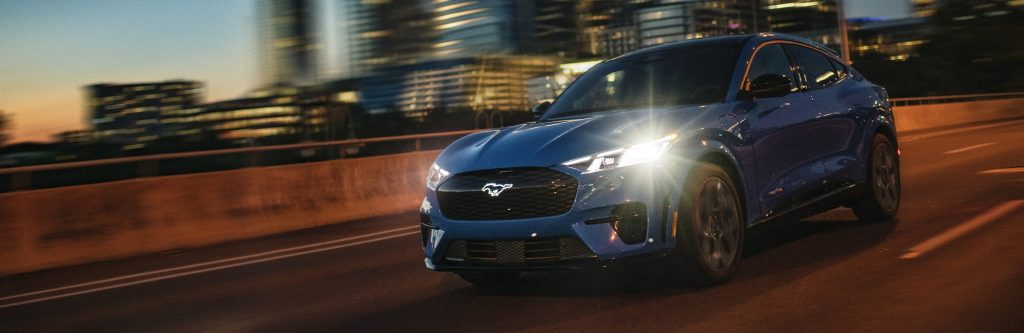
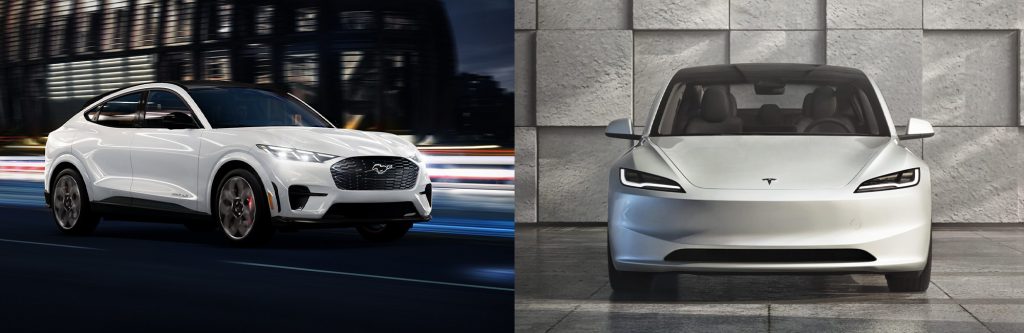
Design is a key differentiator in the Ford Mustang Mach-E vs. Tesla Model 3 matchup. The Ford delivers an athletic, aggressive look with Ford Mustang heritage cues and modern accents like LED lighting and sleek lines, complemented by a modern and elegant cabin. The Ford Mustang Mach-E’s cabin features soft-touch surfaces that enhance its premium feel. In contrast, the Tesla Model 3 leans into futuristic efficiency with its aerodynamic and minimalist exterior. For many, the Ford Mustang Mach-E’s sportier stance and dynamic styling, combined with its superior interior quality, better reflect the spirit of an engaging drive. Read on to uncover more Ford Mustang Mach-E vs. Tesla Model 3 specs.
More Power for Your Pep
In terms of sheer speed and acceleration, the Ford Mustang Mach-E GT vs. Tesla Model 3 Performance comparison is fierce, with the Ford leading with impressive acceleration times. The Ford Mustang Mach-E utilizes instant torque to enhance its performance and control in various driving modes. The Ford Mustang Mach-E leads with a 0–60 MPH time of as low as 3.3 seconds, while the Tesla Model 3 achieves this in as little as 4.2 seconds. The Ford Mustang Mach-E is also backed by an engaging eAWD system, giving it the agility and poise that drivers crave in real-world conditions. In contrast, the Tesla Model 3 possesses a dual-motor AWD, which is perfect for traveling long distances. The Ford Mustang Mach-E vs. Tesla Model 3 range comparison is quite close. The Ford Extended-Range rear-wheel drive model achieves up to an EPA-estimated 320 miles on a full charge, which isn’t too far from the Tesla Model 3’s 363 miles. Both vehicles offer impressive handling, with the Ford Mustang Mach-E providing precise steering feedback and a tuned suspension system. But this isn’t just about numbers, it’s about driving feel. While the Tesla can charge from 10% to 80% in as little as 25 minutes, the Ford Mustang Mach-E’s 43-minute time is complemented by access to the BlueOval™ Charge Network—the largest integrated public network in North America, offering more flexibility with over 100,000 locations.
Optimizing All Spaces Within
Inside, the Ford Mustang Mach-E vs. Tesla Model 3 debate gets interesting. Both models provide seating for up to five. The Tesla Model 3 has up to 17 speakers for immersive sound quality and a 15.4-in. touchscreen for all of your connectivity needs. By contrast, the Ford Mustang Mach-E balances comfort, design, and functionality seamlessly with its 15.5-in. screen, tactile volume knob, and a dedicated gauge cluster. The Ford Mustang Mach-E vs. Tesla Model 3 competition reveals distinct design philosophies. Tesla leans into minimalist control through its central screen, while Ford prioritizes driver usability with its SYNC® 4A system. The Ford Mustang Mach-E vs. Tesla Model 3 comparison also highlights Ford’s efficient use of space with up to 64.4 cu.ft. of cargo space, making it a more practical choice for those needing additional storage. The Tesla only utilizes 24 cu.ft., which may be enough for some, but for more versatility and passenger capacity, more space is favorable.
Safety First
When comparing the Ford Mustang Mach-E vs. Tesla Model 3 on safety, both excel, but have their fair share of similarities as well as their standout features. You can expect automatic emergency braking, lane-keeping assist, post-collision braking, and more from both models, and thanks to the Tesla Model 3’s lower center of gravity, you’d have enhanced rollover resistance and overall crash safety. The Ford Mustang Mach-E’s self-driving vs. Tesla Model 3’s autonomous driving ability is worth mentioning. However, it’s important to stay alert when utilizing BlueCruise or Autopilot, respectively. What makes the Ford Mustang Mach-E stand out is its commitment to reinforcing its position as a family-friendly, secure SUV that doesn’t compromise on passenger safety. The Ford Mustang Mach-E’s traction control settings enhance its driving dynamics, especially in low-grip situations. This also ties into the broader picture when considering Mustang Mach-E vs. Tesla Model 3 reliability, as Ford continues to focus on practical safety and dependability for everyday drivers.
Your Next EV
The Ford Mustang Mach-E vs. Tesla Model 3 comparison ultimately underscores a broader theme of value, usability, and thoughtful design for potential buyers, with each vehicle having its own advantages. The Ford Mustang Mach-E delivers on performance, comfort, and tech at a more accessible price point compared to other electric vehicles. In the context of Ford Mustang Mach-E vs. Tesla Model 3, it becomes even clearer that Ford’s model is purpose-built for modern drivers looking for an electric SUV that makes sense across the board. Take one for a test drive by visiting Crossroads Ford of Indian Trail today!
EV Innovation Face-Off: Ford Mustang Mach-E vs. Tesla Model X – Which Leads the Charge?

Ford Mustang Mach-E vs. Tesla Model X: Which EV Will You Choose?
The electric SUV segment is buzzing, and two heavyweights are leading the charge: the Ford Mustang Mach-E and the Tesla Model X. Both bring electrifying performance, head-turning design, and cutting-edge tech to the table—but which one fits your lifestyle best? With upscale craftsmanship and smart features, the Tesla Model X offers a futuristic, minimalist vibe, while the Ford Mustang Mach-E delivers refined style with a bold, sporty edge. And when it comes to price, the Ford Mustang Mach-E shines as a more budget-friendly gateway into the EV world—without sacrificing power or personality. Explore your options at Crossroads Ford of Indian Trail, and find the EV that checks all your boxes.
Looking Good While You Feel Good
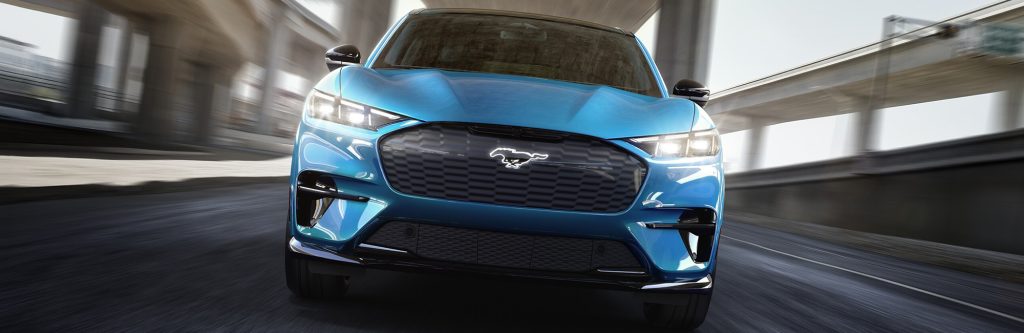
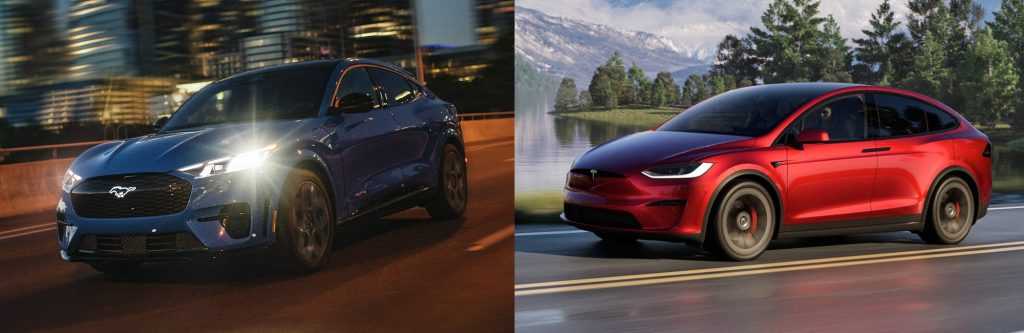
Let’s talk design—because first impressions matter. The Ford Mustang Mach-E comes out strong with its athletic curves, iconic Mustang-inspired details, and striking LED lighting that gives it an unmistakable presence. Step inside, and you’ll find a modern, polished cabin built for comfort and connection. Meanwhile, the Tesla Model X leans into sleek minimalism, with clean lines and aerodynamic form guiding the design. While both are stylish in their own right, the Ford Mustang Mach-E’s sporty attitude and aggressive stance speak to drivers who want their EV to feel as dynamic as it looks. Keep reading for a deeper dive into performance and specs.
More Power for Your Pep
If you’re a speed enthusiast, you’ll rejoice because the Tesla Model X is a true powerhouse. With a jaw-dropping 0–60 MPH acceleration as fast as 2.5 seconds, it’s built to thrill. But raw speed isn’t everything. The Ford Mustang Mach-E offers an exhilarating ride of its own, going from 0–60 MPH as quickly as 3.3 seconds on select trims. Its engaging electric all-wheel drive system gives you surefooted handling and smooth responsiveness that brings joy to every drive, whether you’re weaving through city streets or cruising down the highway. And when it comes to range, the Ford Mustang Mach-E doesn’t back down, offering up to an EPA-estimated 320 miles on select trims, nudging past the Tesla Model X Plaid’s 314-mile range. Charging is another key factor, with Tesla leading in quick recharges, going from 10–80% in about 31 minutes, but Ford balances the scale with its BlueOval™ Charge Network—North America’s largest integrated public charging network with over 100,000 locations for worry-free travel.
Optimizing All Spaces Within
Step inside either SUV and you’ll immediately notice their different approaches to comfort and control. The Tesla Model X makes a bold statement with a minimalist, open-concept interior featuring a 17-in. touchscreen, tri-zone climate control, and a panoramic windshield for an airy, futuristic feel. On the other hand, the Ford Mustang Mach-E takes a more driver-centric approach, offering a 15.5-in. vertical touchscreen, a practical volume knob for easy adjustments, and a digital gauge cluster that keeps key information right where you need it. With the intuitive SYNC® 4A system at your fingertips, staying connected and in control is a breeze. While the Tesla Model X boasts impressive cargo space at 92 cu. ft., the Ford Mustang Mach-E uses its interior wisely with up to 64.4 cu. ft. of flexible cargo room behind the first row, plus handy front trunk storage. Whether you’re hauling groceries, gear, or luggage, the Ford Mustang Mach-E adapts to fit your lifestyle with ease.
Safety First
Safety is a non-negotiable factor in everything you do, including driving. Both the Ford Mustang Mach-E and Tesla Model X deliver advanced protection with high-tech confidence. Standard features like automatic emergency braking, lane-keeping assist, and post-collision braking offer peace of mind no matter which EV you choose. The Tesla Model X benefits from its low center of gravity, a design element that enhances stability and reduces rollover risk, giving drivers an extra layer of assurance on the road. Meanwhile, the Ford Mustang Mach-E focuses on real-world family safety, offering an array of driver-assist technologies and proactive safety systems that work together to help prevent accidents before they happen. With Ford Co-Pilot360®, you’ll enjoy intelligent features like blind spot monitoring and adaptive cruise control, designed to make every drive safer and less stressful. Whether you’re navigating rush-hour traffic or taking the kids on a weekend road trip, the Ford Mustang Mach-E is ready to protect what matters most.
Your Next EV
In the end, choosing between the Ford Mustang Mach-E and Tesla Model X comes down to what matters most to you—value, performance, design, or versatility. The Ford Mustang Mach-E brings exceptional features, driver-focused tech, and thrilling capability at a more approachable price point. It’s a well-rounded electric SUV crafted for modern lifestyles and everyday excitement. Ready to see it for yourself? Visit Crossroads Ford of Indian Trail and take the next step toward your electrified future.
Overview Of The Ford F-550 Work Truck
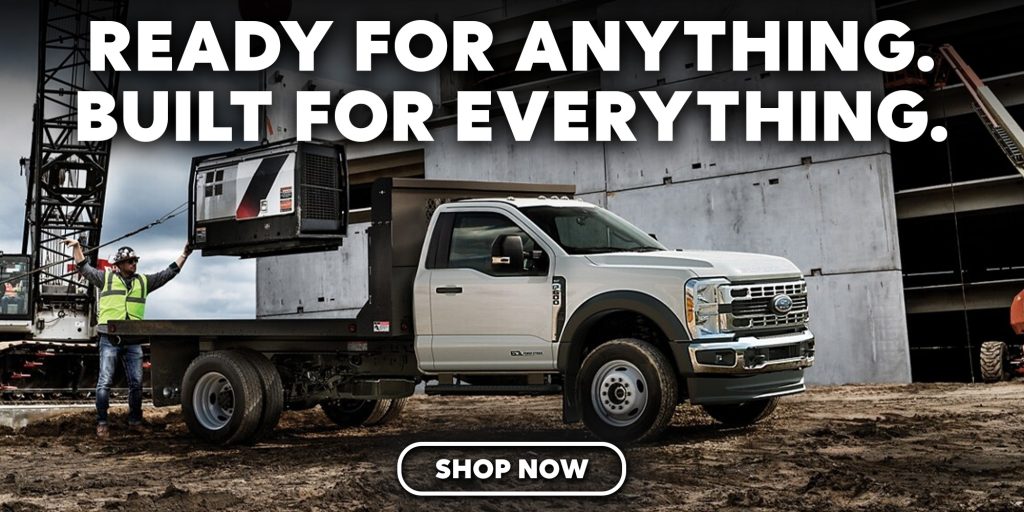
The Ford F-550 is built for toughness and versatility, making it a go-to choice for businesses that require a dependable work truck. This Ford F-550 chassis is available in eight wheelbase lengths, providing customization options to fit various industries. Ready to learn more about the Ford F-550 service truck? Keep reading and head to Crossroads Ford of Indian Trail to shop our selection!
Key features of the Ford F-550
- Standard 7.3L 2V DECVT V8 Gas Engine
- Optional 6.7L Power Stroke® V8 Turbo Diesel Engine
- Available in XL, XLT, and LARIAT® trims
- Regular Cab, Super Cab, and Crew Cab configurations
- Upfitting capabilities with a variety of optional packages

Models and Trim Levels
The Ford F-550 is available in a range of models and trim levels, each offering unique features and capabilities to suit different needs. Whether you need a basic work truck or a fully equipped vehicle with advanced features, there’s a Ford F-550 model that fits your requirements.
Chassis and Body
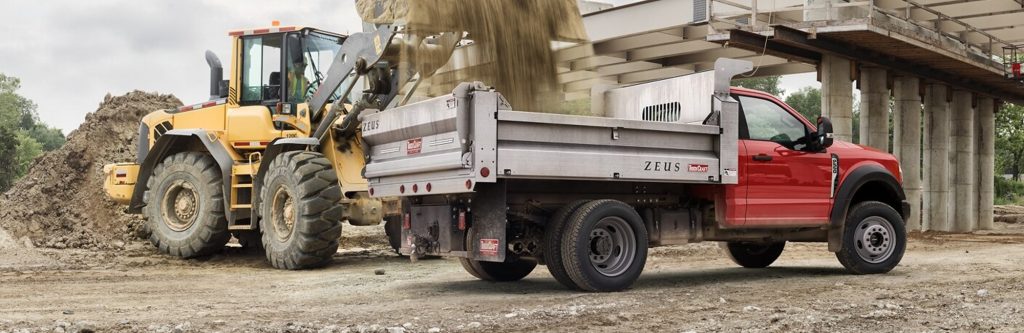
The Ford F-550 service truck features a robust chassis and body design that provides exceptional strength and durability. Built with high-strength steel, the chassis includes a fully boxed frame that enhances stability and support. This design ensures that the Ford F-550 can handle the most demanding jobs, providing a solid foundation for any upfitting needs.
Chassis Cab
The Ford F-550 Chassis Cab is designed for upfitting and customization, making it a versatile choice for various industries. It features a single-entry point for easy access to the electrical architecture, simplifying the integration of upfits and accessories. The Chassis Cab also offers a range of engine options, including the powerful 6.7L Power Stroke® V8 Turbo Diesel engine, ensuring you have the performance needed for any job.
Crew Cab
The Ford F-550 Crew Cab offers plenty of space and comfort for passengers, making it ideal for transporting multiple people. The interior is spacious, providing plenty of headroom and legroom for a comfortable ride. The Crew Cab also features premium cloth and vinyl seats, along with a range of infotainment options to keep passengers entertained and connected on the go.
Powertrain Options
The Ford F-550 offers powerful engine choices designed for durability and efficiency.
Ford F-550 Gas Engine
The 7.3L 2V DECVT V8 gas engine delivers robust performance for demanding tasks. Features include:
- 4.88 Non-Limited Slip Axle
- 4-Wheel Anti-Lock System with Roll Stability Control™ (RSC®)
- TorqShift® 10-Speed Automatic Transmission paired with Selectable Drive Modes
- Optimized air-fuel ratio to maintain performance under heavy loads
Ford F-550 Diesel Engine
The diesel 6.7L Power Stroke® V8 Turbo engine is engineered for power and reliability. It includes:
- 330 horsepower and 950 lb.-ft. torque
- 36,000-PSI fuel-injection system
- Inverse-flow configuration with inboard-mounted exhaust manifolds and turbocharger
- Third-generation design for improved efficiency
Ford F-550 Wheels
The Ford F-550 comes standard with 19.5-in. Argent Painted Steel wheels, designed for durability and reliability on tough job sites. For those looking to enhance their truck’s performance and style, optional upgrades include a stainless steel wheel cover for a polished look, various traction tire options to improve grip and stability, and a Spare Tire & Wheels package that includes a hydraulic jack for added convenience and preparedness on the road.
Advanced Safety Systems
The Ford F-550 service truck prioritizes safety with advanced technology:
- Pre-Collision Assist® with Automatic Emergency Braking (AEB)
- AdvanceTrac® with Roll Stability Control™ (RSC®) and Trailer Sway Control
These systems monitor vehicle stability and help prevent collisions through automatic adjustments.
Technology Integration
The SYNC® 4 system provides 5G Wi-Fi, voice-activated navigation, and Over-the-Air software updates. Key technology features on the Ford F-550 include:
- 4.2-in. or 12-in. digital gauge cluster
- Ford Co-Pilot360® Driver Assist technology
- Wireless Apple CarPlay® and Android Auto™
- Connected Navigation with real-time updates
Ford F-550 Fuel Tank Capacity
The fuel tank capacity of the Ford F-550 vary based on configuration:
- 40 gallons standard
- 66.5 gallons (Dual diesel tanks for DRW models)
Capability and Performance
Towing Capacity
With a high GCWR including a maximum towing capacity of 34,300 lbs., the Ford F-550 service truck offers outstanding towing capability. Opt to add the High-Capacity Trailer Tow Package for even more towing benefits.
4-Wheel Drive Capability
The LARIAT® trim features 4-wheel drive, enhancing control in tough conditions. It includes:
- 2-speed electronic shift-on-the-fly transfer case
- Enhanced traction for challenging terrains
Upfitting and Customization
The Ford F-550 work truck is designed for businesses needing a reliable, versatile vehicle. Upfit options include:
- Knapheide Service Body for increased storage and tool organization
- ActiveX seating surfaces in the LARIAT® trim for durability and easy cleaning
Purchase a Ford F-550 at Crossroads
The Ford F-550 is a powerhouse of performance, safety, and technology, making it a top choice for demanding job sites and commercial needs. Whether you need a Ford F-550 work truck with superior towing capacity or a high-tech, upfitted service truck, this Ford Super Duty model is built to exceed expectations. For businesses looking to invest in a Ford F-550 service truck, Crossroads Ford of Indian Trail offers expert commercial vehicle support. Contact our commercial truck specialists to find the best configuration for your business.
Connect with us

