




Selecting The Right Ford Explorer Configuration
Choosing a Ford Explorer often involves considering which drivetrain matches how you drive every week, not how you imagine driving once a year. Ford makes this decision more nuanced because the Ford Explorer is built on a rear-wheel-drive platform, and can be paired with Intelligent 4WD on higher trims.
For anyone searching for guidance on the Ford Explorer’s drive modes and drivetrains, Crossroads Ford of Indian Trail has put together a comprehensive guide to the RWD and Intelligent 4WD systems. If you use your Ford Explorer for a daily commute, family road trips, towing, winter driving, or gravel-road weekends, the right setup changes how much confidence you feel behind the wheel. This comparison keeps the focus on traction, stability, ownership tradeoffs, and real lifestyle fit, with clear winner callouts in every category.
Why Drivetrain Choice Matters
Many drivers mix up selectable drive modes with the drivetrain itself, but Ford treats them as separate layers of capability. The drivetrain decides where power delivery goes across the front axle and rear axle, while the Terrain Management System™ changes throttle response, transmission shift logic, traction control, and Electronic Stability Control to suit conditions.
That matters because the Ford Explorer is RWD-based and does not use an All-Wheel Drive system. It instead pairs its layout with available Intelligent 4WD depending on trim availability and equipment. If your life includes school runs, interstate travel, towing, bad-weather driving, or occasional off-pavement capability, the drivetrain affects confidence more than the label on the drive mode dial.
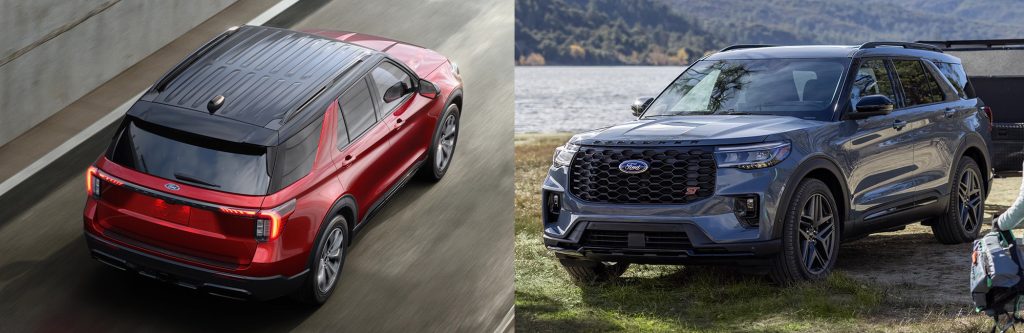
How Terrain Management System™ Works
Before reading about the Ford Explorer drive modes for RWD vs. Intelligent 4WD, it’s important to grasp the concept of what they’re usually functioning with on your commutes. The Terrain Management System™ coordinates inputs from wheel speed sensors, steering angle, throttle input, and road conditions to adjust how the SUV behaves. In practice, that means sharper or softer throttle response, different transmission shift logic, and more targeted intervention from traction control when wheel slip begins.
Not every Ford Explorer gets the same list of modes, because mode availability depends on drivetrain and trim. Ford also resets the system to Normal Mode after a restart, which is a practical ownership detail because it prevents you from accidentally beginning the next trip in a specialized setting.
Selectable Drive Modes You May See
You may see Normal Mode for everyday driving, Eco Mode for smoother efficiency-focused calibration, Sport Mode for quicker responses, and Tow/Haul Mode for heavier loads. On select Ford Explorer models, Slippery Mode, Trail Mode, and Off-Road Mode work with Intelligent 4WD hardware to manage traction more effectively on low-grip surfaces.
Now that you have a general understanding of the drive modes available on a Ford Explorer, it’s time to delve into the RWD and Intelligent 4WD systems.
RWD vs. Intelligent 4WD: Quick Comparison
On dry pavement, RWD usually delivers the cleanest on-road dynamics because the rear axle handles propulsion and the front axle stays focused on steering. Intelligent 4WD goes further by proactively shifting torque for rougher surfaces, deeper snow, and more variable traction.
For most people, the choice should reflect climate, route quality, cargo load, and weekend habits more than marketing labels. A family in Indian Trail, NC, and surrounding areas may prefer Intelligent 4WD for year-round flexibility, including time on gravel roads and winter routes. Read more to learn more about the Ford Explorer’s RWD vs. Intelligent 4WD in order to see how they’ll affect your commutes.
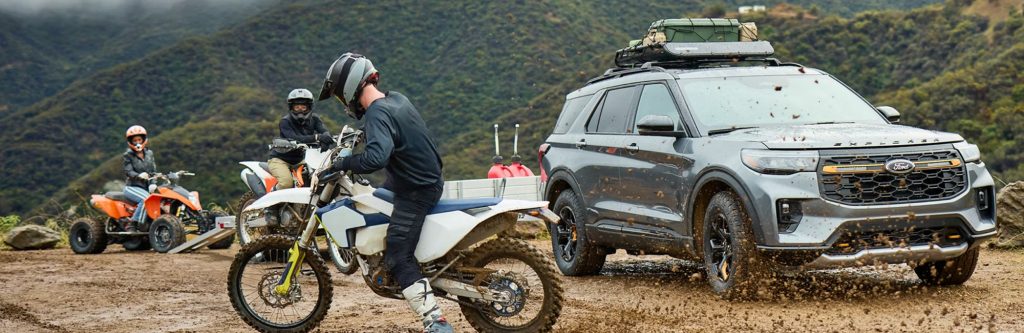
Rear-Wheel Drive in the Ford Explorer
Rear-Wheel Drive sends engine power primarily to the rear wheels, which gives the Ford Explorer a balanced, traditional SUV feel. Because the rear axle handles acceleration, RWD often delivers better handling balance and confidence in corners on dry pavement than many front-wheel-drive-based crossovers. RWD also tends to be the value choice because it avoids the added hardware of powering the front axle. That can help purchase price and preserve a lighter feel, but the tradeoff shows up quickly on wet grass, loose gravel, snow, ice, or steep, slick grades where wheelspin is easier to trigger.
Who RWD Fits Best
RWD fits you best if your daily commute is paved, your climate is mild, and your driving is dominated by highway miles, errands, and occasional towing. It also suits drivers who want a straightforward Ford Explorer Active or similar trim without paying for capability they may rarely use. Keep in mind that traction aids can reduce wheel slip, but they cannot create tire grip where little exists. Good all-season tires help, and winter tires help more, yet two-wheel power delivery still limits traction compared with Four-Wheel Drive systems.
Intelligent 4WD in the Ford Explorer
While the Ford Explorer doesn’t use a traditional AWD label, it instead features an available Intelligent 4WD system that functions similarly by automatically distributing power between the front and rear wheels. Intelligent 4WD is Ford’s more advanced traction system for the Ford Explorer, designed to monitor changing conditions and redistribute torque in real time. By reading wheel speed, steering angle, throttle input, and surface changes, it can react more proactively than a simpler all-season setup.
That makes the Ford Explorer Intelligent 4WD the strongest fit for deeper snow, gravel roads, sand, mud, and repeated off-pavement travel. On models such as the Ford Explorer Tremor®, this system pairs better with adventure-oriented hardware, and that combination matters more than the badge alone.
What Makes Intelligent 4WD Different
The difference is proactive calibration and wider terrain adaptability, not a magic transformation into a rock crawler. Modes like Off-Road Mode and Trail Mode on select Ford Explorer models help the system manage torque vectoring and wheel slip more effectively across changing surfaces. Intelligent 4WD usually costs more and can reduce efficiency compared with RWD.
Common Buyer Misconceptions and Ownership Considerations
The biggest myth is that the Ford Explorer Intelligent 4WD makes winter tires unnecessary. Winter tires still matter for stopping, turning, and controlling braking distance, because traction for acceleration is only one part of winter driving.
Another misconception is that power to all four wheels means unlimited capability. Ice, steep grades, deep mud, and soft sand can overwhelm any system, and long-term ownership also requires attention to tire matching, maintenance, and trim availability across the Ford Explorer lineup.
Which Ford Explorer Setup Should You Choose?
Now that you have a better understanding of the Ford Explorer RWD vs. Intelligent 4WD, it’s time to choose the best one for your needs. Choose RWD if your driving is centered on dry pavement, lower ownership cost, and a more traditional rear-wheel-drive feel. Or choose Intelligent 4WD if you want the most balanced answer for commuting, family travel, rough roads, changing weather, or regular adventure use.
The smartest move is to test-drive multiple Ford Explorer configurations on the same route so you can feel the differences in steering, stability, and low-grip confidence for yourself. If you want help comparing trim availability, drivetrains, and features on the Ford Explorer, Crossroads Ford of Indian Trail offers a friendly place to help you get started. Visit us for a test-drive today!
FAQs
What is the difference between AWD and Intelligent 4WD in the Ford Explorer?
AWD is tuned for automatic all-season traction on normal roads. Intelligent 4WD is a more advanced system that proactively manages torque for tougher weather and more variable terrain. AWD is not available on Ford Explorer models.
Is rear-wheel drive good enough for a Ford Explorer?
Yes, if you spend most of your time on paved roads in mild conditions. RWD is efficient and capable, but it offers less traction than available Intelligent 4WD on snow, ice, and loose surfaces.
Which Ford Explorer drivetrain is best for snow?
Models equipped with Intelligent 4WD are better suited for winter driving, as the system can automatically adjust power between the front and rear wheels to improve traction in changing conditions.
Do Ford Explorer drive modes change the drivetrain?
No. Drive modes adjust settings like throttle response, shift behavior, and traction control so the existing drivetrain performs better in specific conditions.
Should I choose RWD or Intelligent 4WD for towing and family travel?
RWD works well for highway driving and towing in stable weather. Intelligent 4WD adds confidence when driving in rain, snow, gravel, or on less predictable roads, making it a strong choice for families who travel in varied conditions.

